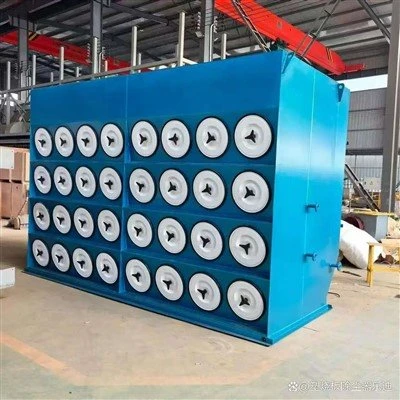
Your Professional Desulfurization Equipment Manufacturer!
Desulfurization equipment removes sulfur dioxide (SO₂) from boiler, kiln and sintering flue gas before it reaches the stack. We design, fabricate and commission complete flue gas desulfurization (FGD) systems — wet limestone-gypsum, semi-dry and dry injection — from 5,000 to over 1,000,000 m³/h, at 90–99 % removal and outlet concentrations down to 35 mg/m³.
What the system includes
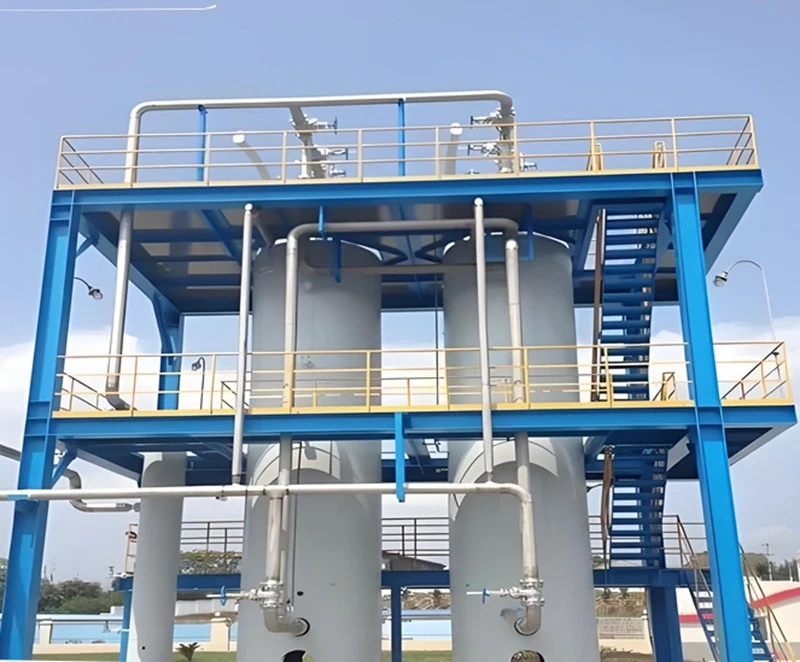
A desulfurization tower is only the absorber. The rest of the train is where most projects go wrong: flue gas take-off and boosting; reagent preparation; the absorber and its slurry circulation; oxidation air and gypsum dewatering; mist elimination, reheat and CEMS; and control and electrical.
Scope is agreed module by module, so you are not charged for a reagent plant you already own. Desulfurization is not denitrification: NOx needs a different reagent and a different temperature window, and where a permit covers both we design them as one train.
-
![Limestone-gypsum Desulfurization Equipment]() Limestone-gypsum Desulfurization EquipmentLimestone-gypsum desulfurization equipment is a core industrial SO₂ removal device, adopting the globally prevalent, mature standard desulfurization process. Using cost-effective, widely available
-
![Wet Desulfurization Equipment]() Wet Desulfurization EquipmentWet desulfurization equipment is an environmental protection device that treats industrial waste gas with liquid absorbents, achieving sulfide removal through chemical oxidation reactions. Since
-
![Dry Desulfurization Equipment]() Dry Desulfurization EquipmentDry desulfurization equipment is a specialized industrial device for gas with low hydrogen sulfide content, small treatment capacity, and high desulfurization precision. Unlike other desulfurization
-
![Semi-dry Desulfurization Equipment]() Semi-dry Desulfurization EquipmentSemi-dry desulfurization equipment employs advanced desulfurization processes and supports customized manufacturing to meet diverse industrial needs. The device is capable of handling SO₂


Specification snapshot
|
Parameter |
Range |
|
Flue gas flow |
5,000–1,000,000 m³/h per system |
|
Inlet SO₂ |
500–10,000 mg/m³ |
|
Removal efficiency |
90–99 % |
|
Outlet SO₂ |
down to 35 mg/m³ |
|
Reagent |
limestone, lime, sodium bicarbonate, ammonia, seawater |
Technology routes and when to use them
Five routes are in commercial use. Efficiency rarely decides the choice — reagent cost, wastewater rules, byproduct offtake and plot space usually do.
|
Route |
Performance |
Choose it when |
|
Wet limestone-gypsum |
Limestone, Ca/S 1.02–1.05. Efficiency 95–99 %. Gas leaves at 50–55 °C, so reheat is needed. Gypsum 90–95 % purity; small wastewater stream. |
Above 200,000 m³/h and inlet SO₂ above 1,500 mg/m³, with limestone and a gypsum offtaker nearby. |
|
Semi-dry CFB or SDA |
Lime, Ca/S 1.2–1.4. Efficiency 85–95 %. Dry gas at 70–80 °C: no reheat, no wastewater. Byproduct leaves with the fly ash. |
Medium flows where wastewater is prohibited, or a slurry circuit would freeze. |
|
Dry sorbent injection |
Hydrated lime or sodium bicarbonate, ratio 1.5–2.5. Efficiency 50–80 %. Gas stays above 130 °C; dry solids only. |
Inlet SO₂ below 800 mg/m³, small flow, an existing baghouse and a tight budget. |
|
Seawater FGD |
Seawater alkalinity. Efficiency 90–98 %. No solid byproduct. |
Coastal sites with a discharge permit. |
|
Ammonia-based |
Ammonia, Ca/S equivalent 1.00–1.05. Efficiency 95–99 %. Byproduct is ammonium sulfate fertiliser. |
A fertiliser plant nearby, and ammonia storage permitted. |
Rule of thumb: above 200,000 m³/h with high inlet SO₂, wet limestone-gypsum wins on lifecycle cost. Below 100,000 m³/h, or where wastewater is not permitted, semi-dry is usually the better answer.


Where these systems are used
Inlet concentration and gas volume decide the route more than the industry does, but each sector has one problem that catches designers out.
Coal power and industrial boilers
800–6,000 mg/m³ depending on coal sulfur; wet FGD, semi-dry below 300 MW.
01
Steel sintering
500,000–1,500,000 m³/h with SO₂, SO₃, dust and dioxin; wet FGD with pre-scrubber and carbon injection.
02
Cement kilns
100–1,500 mg/m³ and swings widely; semi-dry or dry injection using the plant's own limestone dust.
03
Non-ferrous smelting
2–10 % SO₂ off-gas goes to an acid plant first; FGD treats 300–1,000 mg/m³ tail gas.
04
Waste incineration
SO₂ 300–1,000 plus HCl 500–2,000; semi-dry with baghouse and carbon injection.
05
Glass furnaces
400–500 °C after the regenerator, SO₂ 500–3,000; semi-dry or dry after the waste heat boiler.
06
Chemical and Claus tail gas
200–2,000 mg/m³; amine or caustic scrubbing.
07
Pulp and paper recovery boilers
SO₂ 100–500; dry injection or a small semi-dry unit.
08
Why buyers order from us
We are a manufacturer in Xianxian County, Hebei, not a trading company with a catalogue. That matters in this category for five reasons.

·We fabricate the absorber ourselves - FRP winding, steel, rubber lining and machining in one workshop, so a drawing change happens in our shop, not in a subcontractor's queue.
·Process design is in-house, calculated from your gas data rather than bought from a licensor who stops answering emails.
·We design around the five standard failure modes: mist eliminator fouling, sulfite instead of gypsum, lining blistering, fan erosion, gypsum too wet. Every proposal states which apply to your gas.
·Our engineers supervise commissioning through the 72-hour test, as they have in the Philippines, Indonesia, Pakistan and Kyrgyzstan.
·Documents, spares and warranty run through the same office; wear parts held for ten years.
FAQ
Q: What does it remove?
A: SO₂, and incidentally SO₃, HCl, HF and part of the particulate and mercury. Not NOx — that is denitrification.
Q: Which route suits my plant?
A: Four questions: inlet SO₂, gas volume, whether you can discharge wastewater, and who takes the gypsum.
Q: What efficiency can you guarantee?
A: Wet 95–99 %, semi-dry 85–95 %, dry 50–80 %, written as an outlet concentration at your reference O₂ and proven by a 72-hour test.
Q: How much reagent?
A: Wet Ca/S 1.02–1.05, about 1.6–1.8 t of limestone per tonne of SO₂ removed; semi-dry 1.2–1.4; dry 1.5–2.5.
Q: Do I need wastewater treatment?
A: Wet produces 0.1–0.5 m³ per 10,000 m³ of gas and needs treatment. Semi-dry and dry produce none.
Q: Can it be retrofitted with no free space?
A: Usually - a taller narrower absorber, parallel units, or duct over the roof. Send a layout drawing.
Q: What happens to the gypsum?
A: 90–95 % purity at 8–12 % moisture, sold to cement or wallboard plants; landfill design available.
Q: What do you need to quote?
A: Flow, temperature, maximum inlet SO₂, outlet limit with reference O₂, fuel, utilities and layout.
Q: What does a system cost?
A: Two plants with the same gas flow can differ threefold once inlet SO₂, materials and byproduct handling are fixed, so we quote from your data rather than publish a list price.
Q: How long is delivery?
A: About 5–7 months from drawing approval to performance test for a medium wet system; semi-dry and dry are faster because there is less shop work.
As one of the most professional desulfurization equipment manufacturers and suppliers in China, we're featured by quality products and good price. Please rest assured to buy durable desulfurization equipment for sale here from our factory.
wet flue gas desulfurization, Wet Desulfurization Equipment, dry flue gas desulfurization process