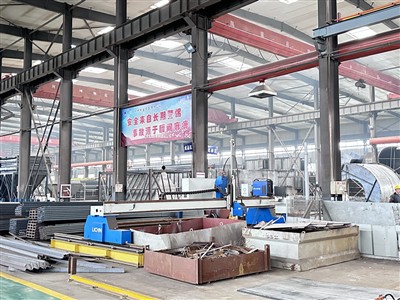
Dry desulfurization equipment has the following structure:
1. Control System
The control system is the "brain" of the dry desulfurization equipment system, responsible for monitoring and controlling the entire system. Through programmable logic controllers (PLCs) and other control devices, precise adjustment and control of parameters such as airflow velocity, feed rate, and system pressure can be achieved, ensuring stable system operation and meeting production requirements.
2. Conveying Piping System
The conveying pipeline is the channel for transporting materials mixed with airflow. It is made of wear-resistant and corrosion-resistant materials to ensure that the materials are not contaminated or damaged during transportation. The diameter, shape, and length of the pipeline are designed according to the characteristics and conveying volume of the material. In addition, the piping system may include auxiliary fittings such as valves, elbows, and expansion joints for regulating airflow and pipeline connections.
3. Silo System
The silo temporarily stores and releases materials. Silos are typically designed as pyramid or conical structures to facilitate material storage and unloading. The design of the silo needs to consider different issues during material storage and unloading, as well as the flow patterns of the material.
4. Air Source Unit
The air source unit is the core power source of the dry desulfurization equipment system, providing the airflow power required for material transport. Common air source equipment includes Roots blowers, compressors, centrifugal blowers, and water ring vacuum pumps. These devices can generate a stable airflow, providing sufficient power for material transport.
5. Feeding Unit
The feeding unit is responsible for uniformly and stably feeding the material into the conveying pipeline. It is usually installed at the beginning of the system, using the negative or positive pressure generated by the air source unit to mix the material with air in a certain proportion before feeding it into the pipeline. Common feeding units include rotary valves, screw conveyors, rotary feeders, screw pumps, bin pumps, and Venturi nozzles. The selection of the feeding unit should be based on a comprehensive consideration of the material characteristics and conveying requirements.